


Finned Tube Optimization for Budget-Conscious Industrial Projects
Finned Tube Optimization for Budget-Conscious Industrial Projects
In the current global industrial landscape, engineering procurement departments are under increasing pressure to balance high-performance thermal requirements with stringent budgetary constraints.
Finned tubes, the critical components of heat exchangers and boilers, often represent a significant portion of equipment costs. Achieving a balance between heat transfer efficiency and cost-effectiveness is not merely about choosing the cheapest material; it involves a sophisticated analysis of design geometry, manufacturing processes, and long-term operational durability.
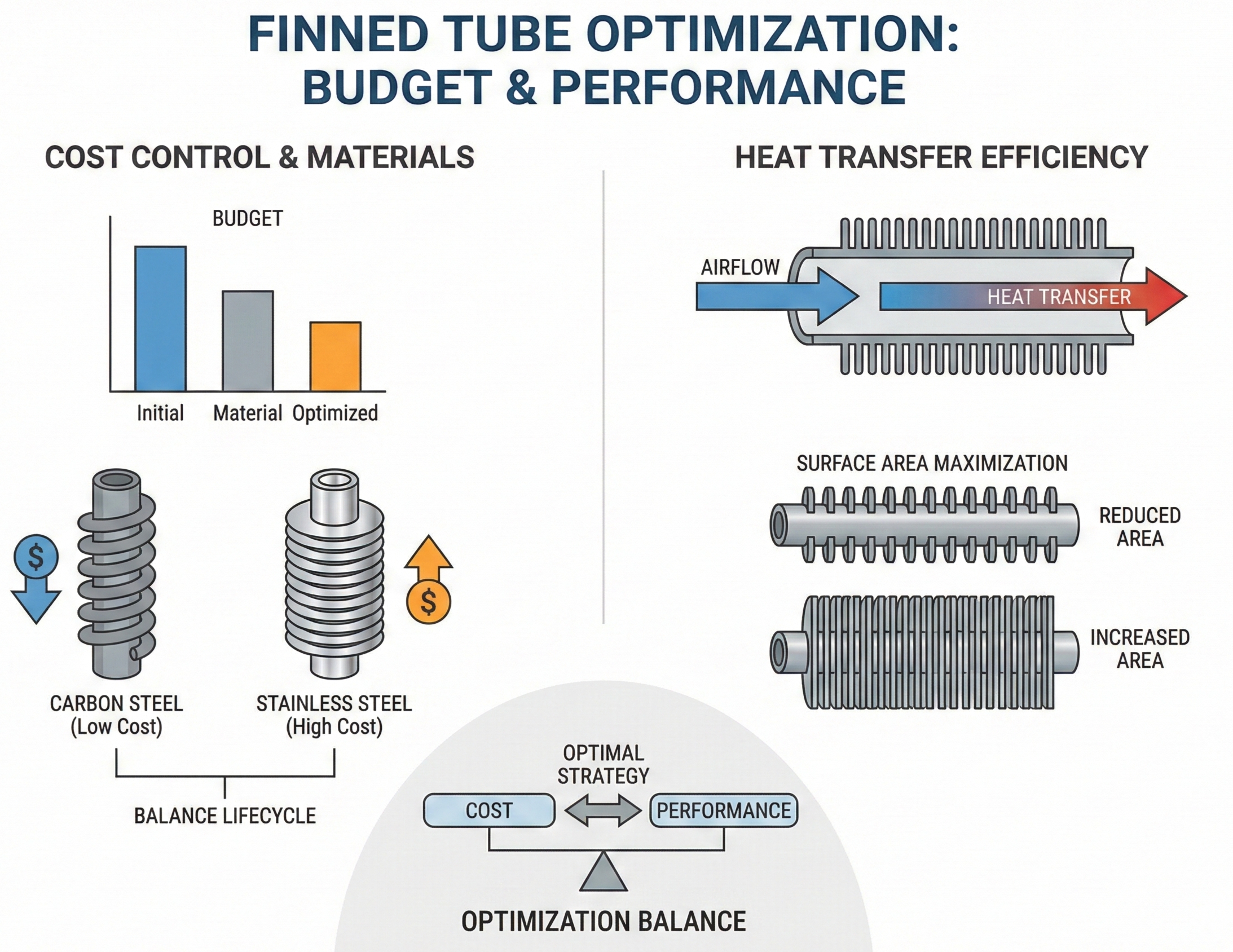
Rationalizing Material Selection for Maximum ROI
The primary driver of finned tube pricing is raw material. While high-alloy materials or pure copper offer exceptional thermal conductivity and corrosion resistance, they are often overkill for specific industrial environments. For projects with limited budgets, a hybrid material approach is frequently the most viable solution.
Example Case:
For instance, carbon steel base tubes paired with aluminum fins (such as the Extruded or L-foot type) provide an excellent strength-to-weight ratio and sufficient thermal performance for most HVAC and air-cooling applications. By analyzing the medium being handled—whether it is steam, oil, or water—engineers can specify materials that meet the required corrosion allowance without over-specifying, thus saving up to 20% on material costs from the outset.
Optimizing Fin Geometry and Density
A common misconception is that more fins always result in better performance. In reality, excessive fin density can lead to increased air resistance and rapid fouling, which drives up maintenance costs and requires more powerful (and expensive) fans.
Increasing the space between fins slightly can reduce the pressure drop, allowing for smaller motor selections in air-cooled heat exchangers.
Reducing fin height while maintaining surface area through strategic tube layout can improve structural integrity and reduce frame weight.
Choosing the right fin type—HFW, Laser Welded, or Embedded—dictated by operating temperature to avoid budget leakage.
The Role of Custom Manufacturing in Cost Control
Standardized Products
Rarely fit the specific nuances of a custom industrial project; often lead to on-site modifications and material waste.
Lord Fin Tube Value
By engaging early, our team moves clients to "application-specific" designs, eliminating waste associated with blueprint modifications.
Visit us: www.lordfintube.com. Our production facility focuses on high-precision fabrication that minimizes material scrap. Whether it is serrated fins for enhanced turbulence or solid fins for easier cleaning, our capability to adjust parameters ensures that every dollar spent contributes directly to thermal output.
Logistics and Lifecycle Considerations
True cost optimization extends beyond the factory gate. For international B2B buyers, the "Total Cost of Ownership" includes shipping, installation, and energy consumption.
Weight Reduction
Optimized fin-to-tube bond achieves higher heat transfer coefficients, requiring fewer tubes and reducing unit dimensions/freight costs.
Fouling Resistance
Selecting environment-specific fin types prevents premature efficiency drops, saving thousands in cleaning and downtime.
"Lord Fin Tube remains committed to delivering high-quality finned tube solutions that respect the financial realities of modern infrastructure and energy projects. By focusing on engineering precision rather than just material volume, we empower our partners to build better systems for less."
Lord Fin Tube
Your Strategic Partner in Thermal Optimization