


Lord Fin Tube--High Flux Longitudinal Fin Tube
High Flux Longitudinal Fin Tubes
In the realm of thermal management and heat exchange systems, high flux longitudinal fin tubes represent a significant advancement in heat transfer technology. These specialized components are engineered to address the demanding requirements of modern industrial applications where efficient heat dissipation is critical to operational success and energy efficiency.
What are High Flux Longitudinal Fin Tubes
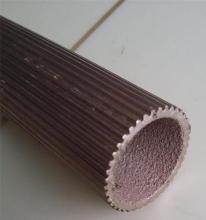
High flux longitudinal fin tubes are sophisticated heat transfer elements characterized by their longitudinally oriented fins that are integrally bonded or extruded onto the base tube surface. The term "high flux" specifically refers to their exceptional capacity to manage substantial heat flux densities—the rate of heat transfer per unit area—making them indispensable in applications requiring rapid and efficient thermal exchange.
The fundamental design principle behind these tubes involves maximizing the surface area available for heat transfer while maintaining structural integrity and thermal conductivity. Unlike conventional finned tubes, high flux longitudinal fin tubes feature taller, more densely packed fins that create an extended surface area, dramatically enhancing their heat transfer capabilities.
Engineering Design and Manufacturing Process
Advanced Manufacturing Techniques
The production of high flux longitudinal fin tubes employs specialized manufacturing processes that ensure optimal thermal and mechanical properties. The most common methods include:
Material Selection Considerations
The choice of materials for high flux longitudinal fin tubes is dictated by application requirements, with common options including:
| Material | Thermal Conductivity (W/m·K) | Corrosion Resistance | Typical Applications |
|---|---|---|---|
| Copper & Copper Alloys | 385-400 | Moderate | HVAC, refrigeration, power generation |
| Aluminum & Aluminum Alloys | 200-240 | Good (with protective coatings) | Air-cooled heat exchangers, automotive |
| Stainless Steel (304, 316) | 15-25 | Excellent | Chemical processing, marine applications |
| Carbon Steel | 45-55 | Fair (requires protection) | High-temperature industrial processes |
High Flux Finned Tubes Performance Advantages
Technical Insight: Thermal Performance Metrics
The effectiveness of high flux longitudinal fin tubes is quantified through several key parameters: fin efficiency (typically 85-95% for optimized designs), overall heat transfer coefficient (significantly higher than bare tubes), and temperature effectiveness. These metrics demonstrate why these components deliver superior performance in applications where thermal efficiency is paramount.
Industrial Applications and Use Cases
High flux longitudinal fin tubes find applications across diverse industries where efficient heat transfer is critical to process efficiency, safety, and operational economics.
Power Generation
Used in air-cooled condensers, feedwater heaters, and turbine oil coolers in thermal and nuclear power plants, where they contribute to overall plant efficiency and reliability.
HVAC & Refrigeration
Implementated in chillers, condensers, and evaporators to enhance system COP (Coefficient of Performance) while reducing equipment size and energy consumption.
Process Industries
Critical components in heat recovery steam generators, process heaters, and reactor cooling systems in chemical, petrochemical, and pharmaceutical manufacturing.
Renewable Energy Systems
Employed in concentrated solar power systems, geothermal power plants, and biomass energy facilities to maximize thermal energy capture and conversion efficiency.
Marine & Offshore
Used in seawater-cooled heat exchangers, lube oil coolers, and central cooling systems where corrosion resistance and compact design are essential.
Automotive & Aerospace
Applied in charge air coolers, oil coolers, and environmental control systems where weight and space constraints demand maximum heat transfer in minimal volumes.
Design Considerations and Selection Criteria
When specifying high flux longitudinal fin tubes for a particular application, several factors must be carefully evaluated to ensure optimal performance:
Performance Comparison: High Flux vs. Standard Finned Tubes
When compared to standard finned tubes, high flux longitudinal fin tubes demonstrate clear advantages in demanding applications:
| Parameter | Standard Finned Tubes | High Flux Longitudinal Fin Tubes |
|---|---|---|
| Surface Area Enhancement | 3-5 times base area | 5-8 times base area |
| Maximum Heat Flux Capacity | Up to 50 kW/m² | Up to 100+ kW/m² |
| Fin Efficiency | 70-85% | 85-95% |
| Pressure Drop | Moderate to High | Low to Moderate |
| Fouling Resistance | Standard | Enhanced (optimized fin spacing) |
Future Trends and Technological Developments
The evolution of high flux longitudinal fin tubes continues with several promising developments on the horizon:
High flux longitudinal fin tubes
High flux longitudinal fin tubes represent a sophisticated solution to modern thermal management challenges, offering unparalleled heat transfer efficiency in a compact, reliable package. Their unique combination of extended surface area, optimized fin geometry, and robust construction makes them indispensable across numerous industries where thermal performance directly impacts operational efficiency, energy consumption, and environmental compliance. As thermal management requirements continue to intensify across industrial sectors, the role of these advanced heat transfer components will only grow in importance.