


Stainless steel 304 blind flange
Stainless Steel 304 Blind Flange
What is 304 Blind Flange?
A Stainless steel 304 blind flange is a solid disk flange made from grade 304 stainless steel, an austenitic alloy known for its corrosion resistance. Unlike other flanges, it lacks a center opening, making it ideal for sealing off piping systems or vessels permanently or temporarily. This design ensures no flow of fluids or gases, which is why it is termed "blind."
How 304 Blind Flange is Manufactured
Manufacturing involves forging or machining stainless steel 304, which contains chromium and nickel for durability. The process follows standards like ASME B16.5 to ensure precise dimensions, bolt holes, and flat-faced sealing surfaces. Quality checks focus on material integrity and pressure tolerance, which are critical for safe application in industries such as chemical processing or oil and gas.
Which Applications Use 304 Blind Flange
304 blind flanges are versatile in applications where pipeline ends need closure. Common uses include:
- Pressure vessels in water treatment plants
- Piping systems in food processing for hygiene compliance
- Oil and gas pipelines for temporary isolation during maintenance
- Chemical industries due to resistance to oxidation and corrosion
Their ability to withstand moderate temperatures and pressures makes them a reliable choice for many industrial settings.
304 Blind Flange Specifications
Specifications vary based on pipe size and system requirements. Key aspects include dimensions, pressure ratings, and material grades. Below is a table summarizing common specifications for stainless steel 304 blind flanges.
| Pipe Size (inches) | Outside Diameter (mm) | Thickness (mm) | Pressure Class (ASME) | Bolt Hole Quantity |
|---|---|---|---|---|
| 1/2 | 90 | 9.5 | 150 | 4 |
| 2 | 152 | 12.7 | 300 | 8 |
| 4 | 229 | 15.9 | 600 | 8 |
| 8 | 381 | 22.2 | 900 | 12 |
| 12 | 514 | 25.4 | 1500 | 16 |
These specifications help procurement teams select the right flange for pressure and temperature conditions. Always verify standards like ASME B16.5 for compliance.
304 Blind Flange Corrosion Resistance
Stainless steel 304 offers excellent corrosion resistance due to its chromium content, which forms a passive oxide layer. This makes it suitable for environments with moisture, chemicals, or high temperatures. However, in highly acidic or chloride-rich settings, grade 316 might be preferred. Regular inspections can prevent pitting or crevice corrosion, extending the flanges lifespan.
How to Select 304 Blind Flange
Selection depends on factors like pressure rating, temperature range, fluid compatibility, and system design. Consider these points:
- Pressure Rating: Match the flange class (e.g., 150, 300) to the systems maximum operating pressure.
- Temperature: 304 stainless steel performs well up to 870°C, but check for thermal expansion effects.
- Material Compatibility: Ensure the flange resists chemicals in the fluid; 304 is generally safe for most non-aggressive media.
- Standards: Look for certifications like ASME or ISO to guarantee quality and safety.
Consulting with suppliers about testing and documentation can avoid installation issues.
304 Blind Flange Installation Methods
Installation involves aligning the blind flange with the mating flange, using gaskets for sealing, and tightening bolts evenly to prevent leaks. Steps include:
- Clean the flange faces to remove debris.
- Place a compatible gasket (e.g., rubber or PTFE) between the flanges.
- Insert bolts and tighten in a cross pattern to ensure uniform pressure.
- Torque bolts to the manufacturers specification to avoid over-tightening.
Proper installation ensures a secure seal and reduces maintenance needs. For temporary closures, blind flanges can be easily removed for access.
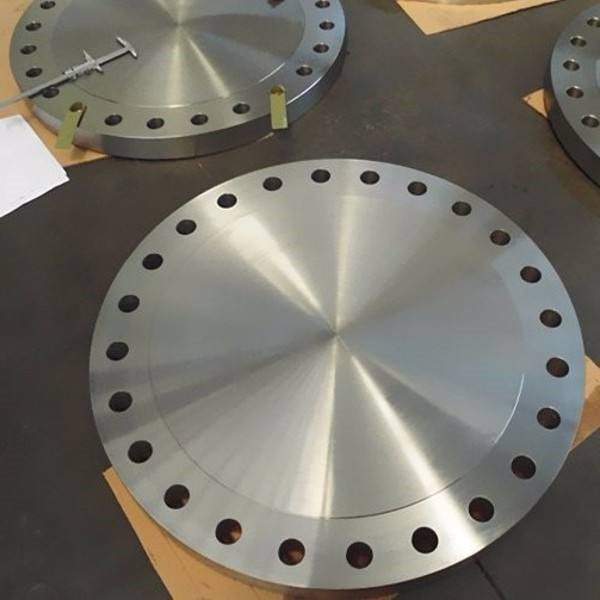
Image: A stainless steel 304 blind flange used in a piping system, showcasing its solid disk design.
304 Blind Flange Standards and Certifications
Standards govern the production and use of 304 blind flanges. Key standards include:
- ASME B16.5 for dimensions and pressure ratings
- ASTM A182 for material specifications
- ISO 7005 for international compatibility
Certifications from recognized bodies ensure the flange meets safety and performance criteria. Procurement should request material test reports (MTRs) to verify grade 304 composition and traceability.
Why 304 Blind Flange is Cost-Effective
304 blind flanges offer a balance of durability and affordability. Their corrosion resistance reduces replacement costs, while standardization simplifies sourcing. Compared to specialized alloys, 304 stainless steel is widely available, lowering lead times and expenses for bulk orders. However, consider total lifecycle costs, including maintenance and potential upgrades for harsh environments.