


Lord Fin Tube-Threaded Steel Pipe
Threaded Steel Pipes
Threaded steel pipes, also known as twisted tubes or pattern tubes, represent a significant advancement in heat transfer technology. These specialized pipes feature a unique spiral pattern created through precision cold-rolling processes, which dramatically enhances their thermal performance compared to traditional smooth pipes.
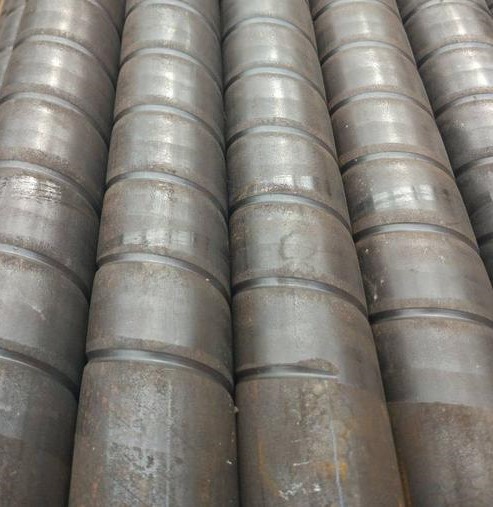
Threaded steel pipes in boiler heat exchange systems
Technical Innovation
The threaded design creates turbulent flow within the pipe, breaking up the boundary layer that typically impedes heat transfer in smooth pipes. This turbulence increases heat exchange efficiency by 70-80% while maintaining structural integrity and durability.
Threaded Steel Pipes Manufacturing Process
The production of threaded steel pipes involves sophisticated cold-rolling techniques that transform standard steel or stainless steel pipes into high-performance heat exchange elements.
Cold-Rolling Precision
During the cold-rolling process, the pipe undergoes controlled deformation where the surface is impressed with a precise spiral pattern. This process causes the pipe to shrink by approximately 0.1% to 0.5%, with the exact shrinkage determined by three critical parameters:
Thread Geometry Parameters
Threaded Steel Pipes Performance Comparison
| Parameter | Threaded Steel Pipe | Smooth Steel Pipe | Copper Pipe |
|---|---|---|---|
| Heat Transfer Coefficient | 1.7-1.8x higher than smooth pipe | Baseline | 1.3-1.5x higher than smooth pipe |
| Fouling Resistance | High (self-cleaning effect) | Low | Medium |
| Material Cost | Medium | Low | High |
| Lifespan | 15-20 years | 10-15 years | 8-12 years |
| Maintenance Requirements | Low | Medium | High |
Threaded Steel Pipes Advantages
Enhanced Heat Transfer
The spiral design disrupts laminar flow, creating turbulence that significantly improves thermal exchange efficiency compared to smooth pipes.
Self-Cleaning Mechanism
The turbulent flow prevents scale buildup and promotes automatic descaling, reducing maintenance requirements and downtime.
Space Optimization
Higher efficiency allows for more compact heat exchanger designs, saving valuable space in industrial applications.
Material Efficiency
Fewer pipes are needed to achieve the same heat transfer performance, reducing material costs and equipment size.
Energy Savings
Improved thermal efficiency translates to lower energy consumption for the same heat transfer requirements.
Structural Integrity
The cold-rolling process work-hardens the surface, enhancing durability and resistance to mechanical stress.
Threaded Steel Pipes Applications
Threaded steel pipes have become the preferred solution across multiple industries due to their superior performance characteristics:
- Power plant condensers
- Boiler heat exchange systems
- Chemical processing equipment
- Refinery heat exchangers
- HVAC systems
- Marine applications
- Food processing equipment
- Pharmaceutical manufacturing
Technical Specifications
| Material Grade | Outer Diameter (mm) | Wall Thickness (mm) | Max Working Temperature (°C) | Pressure Rating (MPa) |
|---|---|---|---|---|
| Carbon Steel A179 | 15-50 | 1.5-3.0 | 450 | 6.0 |
| Stainless Steel 304 | 15-50 | 1.5-3.0 | 800 | 5.5 |
| Stainless Steel 316 | 15-50 | 1.5-3.0 | 800 | 5.5 |
| Duplex Steel 2205 | 15-50 | 2.0-4.0 | 300 | 7.0 |
Economic Impact Analysis
Industry data shows that replacing smooth tubes with threaded steel pipes in heat exchange systems can reduce equipment size by 25-35%, lower material costs by 15-25%, and decrease energy consumption by 12-18% while maintaining equivalent thermal performance.
Threaded Steel Pipes Installation and Maintenance
Installation
Proper installation is critical for maximizing the performance of threaded steel pipes. Key considerations include:
- Ensure proper alignment to prevent stress concentration
- Use compatible gasket materials that accommodate the threaded surface
- Follow torque specifications during assembly to avoid deformation
- Implement appropriate expansion joints to accommodate thermal movement
Maintenance
While threaded pipes require less maintenance than smooth tubes, regular inspection is recommended:
- Annual visual inspection for erosion or corrosion
- Biannual performance testing to detect efficiency degradation
- Monitoring pressure drop across the heat exchanger
- Chemical cleaning only when necessary, using compatible cleaning agents
Threaded steel pipes
Threaded steel pipes represent a significant technological advancement in heat transfer technology, offering superior performance, reduced maintenance, and economic benefits across numerous industrial applications. Their unique spiral design creates turbulent flow that enhances heat transfer efficiency while providing self-cleaning capabilities.
As industries continue to prioritize energy efficiency and operational cost reduction, threaded steel pipes are increasingly becoming the standard choice for heat exchange systems in power generation, chemical processing, and other thermal applications.
With proper selection, installation, and maintenance, these advanced heat transfer components can deliver reliable performance and substantial economic benefits throughout their extended service life.