


Why Aluminum Fins Are the Industry Standard for Extruded Finned Tubes
The Dominance of Aluminum in Extruded Finned Tube
In the complex landscape of industrial heat exchange, the selection of materials determines not only the efficiency of the thermal transfer but also the long-term operational costs and durability of the equipment. Among the various configurations available, the extruded finned tube stands out as a high-performance solution, characterized by its mechanical bond and seamless integration between the core tube and the outer fin.
While the base tube may vary depending on the fluid being transported—ranging from carbon steel to copper or stainless steel—the outer fin material is almost universally aluminum. This industry preference is not a coincidence but the result of specific metallurgical properties that align perfectly with the demands of heat transfer technology.
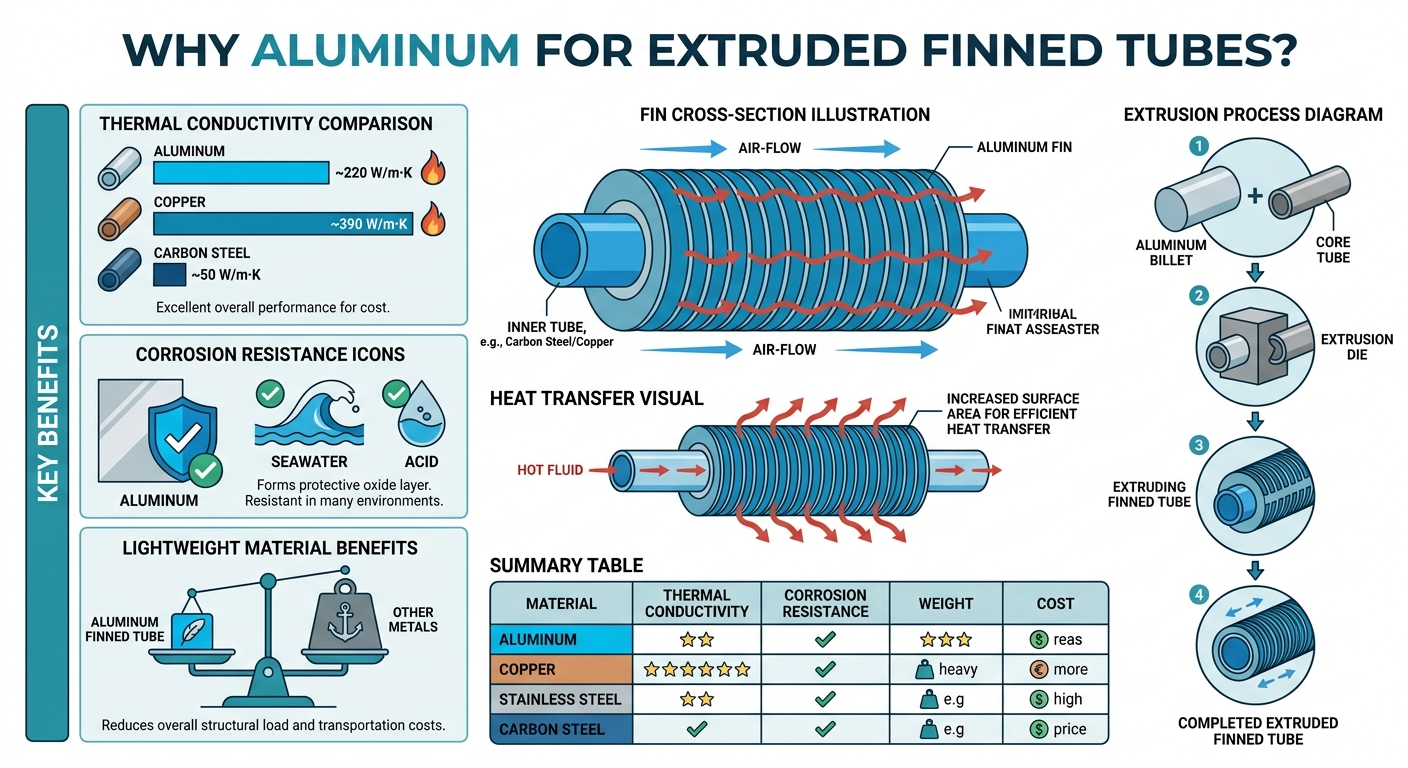
Key Advantages of Aluminum Selection
Superior Thermal Conductivity
Aluminum (Al1060/Al6063) offers 200-230 W/m·K. Its low density (1/3rd of steel) allows for dense, high-profile fins without adding prohibitive weight, simplifying structural requirements and reducing global shipping costs.
Material Ductility
Exceptional ductility allows aluminum to flow into disk dies during cold-rolling, forming thin fins while creating a high-pressure mechanical bond that eliminates air gaps (a common failure in L or G type fins).
Environmental Durability
Naturally forming a protective oxide layer, aluminum fins resist atmospheric corrosion. The extruded sleeve encapsulates and shields the base tube from harsh coastal or chemical environments.
Key Specifications for Aluminum Extruded Finned Tubes
Enhancing Heat Transfer through Surface Integrity
The mechanical bond achieved through aluminum extrusion is resilient to thermal cycling. In many other fin types, repeated heating and cooling cause the fins to loosen due to different expansion rates, leading to "thermal resistance" at the interface. The high-pressure bond of the extruded aluminum fin maintains its integrity, ensuring that the heat transfer coefficient remains stable over years of operation.
Furthermore, the smooth surface of extruded aluminum fins is less prone to fouling compared to tension-wrapped fins. This ease of cleaning is a critical factor for maintenance teams in the power generation and petrochemical sectors, where efficiency drops can lead to significant financial losses.
At www.lordfintube.com, we leverage advanced cold-rolling technology to produce aluminum extruded finned tubes that meet the most stringent international standards. Our manufacturing process focuses on precision, ensuring that each fin is perfectly formed to maximize your system’s thermal performance.