

High Frequency Fin Tube for Economizer
High Frequency Fin Tube for Economizer
High frequency fin tubes represent a critical advancement in heat exchanger technology, specifically engineered for economizer applications in industrial boiler systems. These specialized components are designed to maximize heat recovery from flue gases, significantly improving thermal efficiency while reducing operational costs.
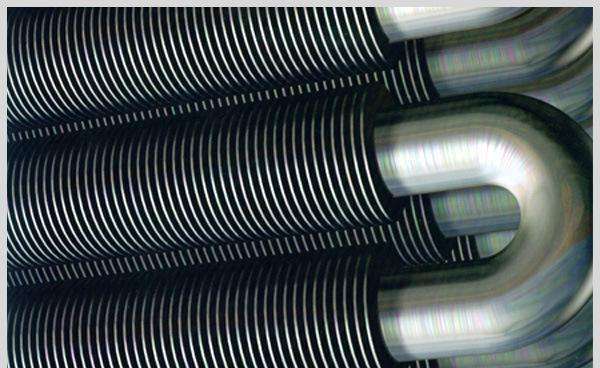
High Frequency Fin Tube Construction
The manufacturing process of high frequency fin tubes involves precise engineering to ensure optimal performance in economizer applications. The high-frequency welding technique creates a metallurgical bond between the fin and base tube that withstands extreme thermal cycling and mechanical stress.
Base Tube Materials
Carbon steel, stainless steel 304/316, alloy steels (T11, T22, T91), and duplex stainless steels selected based on operating temperature, pressure, and corrosion requirements.
Fin Materials
Carbon steel, stainless steel, Corten steel, and specialized alloys with fin heights ranging from 12-25mm and thicknesses from 1.0-2.0mm depending on application requirements.
Welding Process
High-frequency resistance welding at 200-400 kHz ensures deep penetration and homogeneous bonding without compromising the base tube structural integrity.
Technical Specifications
| Parameter | Standard Range | Special Applications | Testing Standards |
|---|---|---|---|
| Base Tube OD | 25.4mm - 76.2mm | Up to 114.3mm | ASTM A213, ASTM A179 |
| Fin Height | 12mm - 19mm | Up to 25mm | Custom Requirements |
| Fin Density | 157-315 fins/meter | Up to 472 fins/meter | Customer Specifications |
| Operating Temperature | Up to 450°C | Up to 650°C | ASME BPVC Section I |
| Pressure Rating | Up to 1500 PSI | Up to 3000 PSI | ASME BPVC Section VIII |
Performance Advantages
The High Frequency Fin Tube for Economizer delivers superior performance characteristics that translate directly into operational benefits for industrial plants and power generation facilities.
| Performance Metric | Standard Bare Tubes | High Frequency Fin Tubes | Improvement |
|---|---|---|---|
| Heat Transfer Efficiency | Base Reference | 3.5-5.5x Higher | 250-450% |
| Surface Area Ratio | 1.0 (Reference) | 6.5-12.5 | 550-1150% |
| Fouling Resistance | High | Low to Moderate | 40-60% Reduction |
| Pressure Drop | Low | Moderate Increase | 15-25% Higher |
| Maintenance Interval | 6-12 Months | 18-36 Months | 200-300% Longer |
Economizer Applications
High frequency fin tube economizers serve critical functions across multiple industries by recovering waste heat and improving overall system efficiency.
Coal-fired, natural gas, and biomass power plants utilize economizers to preheat feedwater, achieving 3-6% efficiency improvements.
Chemical processing, refining, and manufacturing facilities recover waste heat from process boilers and steam generators.
Shipboard economizers utilize compact high frequency fin tube designs to maximize heat recovery in space-constrained environments.
MSW and biomass combustion facilities employ economizers to increase overall thermal efficiency and meet emission standards.
Design Considerations
Proper selection and design of high-frequency fin tubes for economizer applications require careful consideration of multiple operational parameters to ensure optimal performance and longevity.
Gas Side Corrosion
Acid dew point calculations determine minimum metal temperatures to prevent sulfuric and hydrochloric acid condensation that causes corrosion.
Ash Erosion
Fly ash velocity limitations and proper fin spacing prevent excessive erosion in coal-fired applications, extending tube lifespan.
Thermal Stress
Differential expansion between fins and base tube is accommodated through proper material selection and welding techniques.
High Frequency Fin Tube for Economizer Operational Benefits
High frequency fin tube economizers typically achieve 4-8% fuel savings, reduce CO2 emissions by 5-10%, and provide payback periods of 12-24 months through improved thermal efficiency and reduced operating costs.Regular inspection and maintenance ensure long-term reliability of high frequency fin tube economizers. Key maintenance activities include visual inspection for fin damage, soot blower operation verification, and periodic performance testing to detect fouling or corrosion issues before they impact operation.